North Carolina’s window tint law comes down to one number: every window except the windshield must let at least 35% of visible light through, and a reading above 32% on an approved meter counts as legal. The windshield can only be tinted along the top, down to the AS1 line or 5 inches, whichever is longer. On SUVs, pickups and minivans, the windows behind the driver are exempt from the darkness limit.
Those are the rules in G.S. 20-127, the state statute that covers window tinting. What changed recently is how they are enforced, which matters if you’re choosing a shade in 2026.
NC window tint law limits at a glance
| Window | Rule for cars (sedans, coupes, hatchbacks) | Rule for SUVs, pickups and minivans |
|---|---|---|
| Windshield | Top strip only, down to the AS1 line or 5 inches from the top, whichever is longer | Same |
| Front side windows | At least 35% light transmission (passes above 32% on a meter) | Same |
| Rear side windows | At least 35% light transmission | No darkness limit |
| Rear window | At least 35% light transmission | No darkness limit |
| Reflectance | 20% or less on any tinted window | 20% or less on the front side windows |
| Colors | No red, yellow or amber film, and film must be nonreflective | Same |
The statute calls an SUV, pickup or minivan a “multipurpose vehicle”: a passenger vehicle built for 10 or fewer people that sits on a truck chassis or has features for occasional off-road use. If your vehicle fits that description, the 35% and reflectance limits apply only to the windshield strip and the two front side windows.
What the 35% rule means for the shade you pick
Tint shades are named by visible light transmission (VLT), the percentage of light that gets through. Lower numbers are darker. At King Tutt Graphics, the automotive window tint shades run from 5% limo tint to 70%, and here’s how they line up with North Carolina law:
- 35%, 45%, 55% and 70% are the shades in that range that can go on any side or rear window of a car.
- 5%, 10%, 15% and 20% are darker than the state limit. On a sedan or coupe, they aren’t legal on any window without a medical permit. On an SUV, pickup or minivan, they can go on the windows behind the driver.
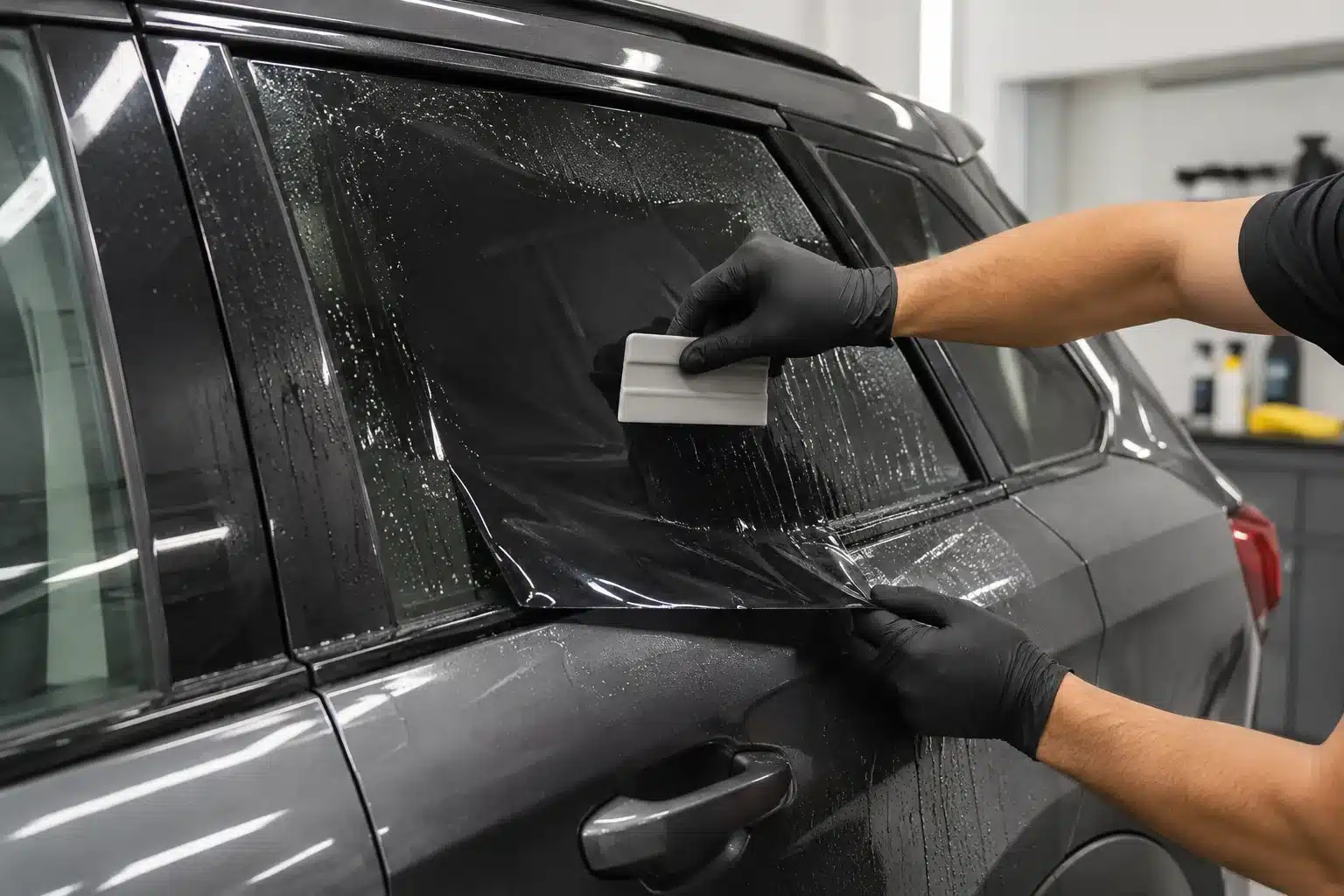
One detail catches people out. The law measures the window, not the film. Factory glass already blocks some light, so a 35% film on top of it reads lower than 35% once it’s installed. That’s why the shade on the film box and the number on an officer’s meter don’t always match, and why the front windows are where you want the most margin.
Window tint is no longer checked at inspection (since Dec. 1, 2025)
Until late 2025, tint was part of North Carolina’s annual safety inspection, and inspectors charged an extra fee to meter it. That ended on December 1, 2025. According to the NCDMV inspection page, tint checks are no longer part of the safety inspection and the separate $10 tint inspection fee is gone.
The limits themselves did not change. NCDMV states that after-factory tint still has to meet G.S. 20-127, and windows still may not measure darker than 32% on a state-approved meter. Enforcement has simply moved to the roadside:
- Driving with windows that don’t meet the limits is a Class 3 misdemeanor.
- Applying non-compliant tint to a vehicle that is subject to North Carolina safety inspection is also a Class 3 misdemeanor, so a reputable installer should not put illegal film on your front windows.
- Under the same 2025 law, drivers with tinted windows must roll down the window on the side an officer approaches during a traffic stop.
If you are charged, the statute gives you a defense: remove the tint within 15 days and bring a certificate from the Division of Motor Vehicles or the Highway Patrol showing the window now complies.
Exceptions to North Carolina tint law
SUVs, pickups and minivans
This is the exception most drivers use. Windows behind the driver on a multipurpose vehicle aren’t held to the 35% or 20% reflectance limits, which is why many SUVs and trucks run a lighter legal shade up front and a darker one in the back. Our Satin Black Bronco Raptor project is one example of a full vehicle tint on an SUV, finished alongside paint protection film and a ceramic coating.

Medical exception permits
If you have a medical condition that makes you photosensitive to visible light, you can apply for a medical exception permit through the NCDMV Drivers Medical Evaluation Program, with a medical evaluation form completed by your doctor. The permit:
- Is valid for up to five years, and renewal needs a new medical recertification.
- Names the vehicle, the windows that may be tinted and the tint levels allowed.
- Must be carried in that vehicle whenever it’s driven.
- Comes with a sticker that goes on the lower left corner of the rear window, between the glass and the film, so it has to be in hand before the tint goes on.
Bring the permit to your appointment so the installed shades match what it allows.
Other exceptions
The darkness and reflectance limits also don’t apply to limousines, motor homes, ambulances, excursion passenger vehicles, law enforcement vehicles and the rear window of property-hauling vehicles. A vehicle registered in another state only has to meet that state’s rules. Commercial vehicles covered by federal motor carrier rules (49 CFR Part 393) follow the federal standard instead.
Can you tint a windshield in North Carolina?
Only the top strip can be tinted, down to the AS1 line marked on the glass or 5 inches from the top, whichever is longer. The windshield gets no exceptions, not even for SUVs or medical permits.
There is one allowance: the statute permits an untinted, clear film on the windshield that reduces or blocks ultraviolet light, as long as it doesn’t obstruct vision. That’s an option if your main goal is UV protection rather than a darker look.
How to choose a legal shade that still does the job
- Decide what you want most. Heat, glare, privacy and looks pull in different directions. A darker shade adds privacy, but a darker film is not automatically a cooler one, so ask about heat rejection separately from shade.
- Keep margin on the front windows. Because factory glass and film combine, choose a front shade that leaves room above the 32% meter reading rather than one that sits right on the line.
- Use the rear-window exception if you have it. On an SUV, pickup or minivan, you can go darker behind the driver and stay legal up front.
- Think about night driving. Very dark film on the front windows cuts the light you see by at night and in heavy rain, so weigh that against how and when you drive most.
Our Range Rover Defender project shows tint added to a satin PPF and ceramic coating package, a common pairing when owners are protecting a vehicle inside and out.
Get a tint quote in Raleigh
If you’re not sure which shades are legal for your vehicle, tell us the make, model and which windows you want done, and whether you have a medical permit. Request a window tint quote and our team will help you pick a shade that fits the look you want and North Carolina’s limits.